 # Russia's Planned Oil Export Cuts: A Potential New Wave of Global Energy Price Increases?
The global energy market stands on the brink of significant disruption as Russia prepares to implement one of its most substantial oil export reductions in recent months. With exports expected to plummet by approximately 800,000 barrels per day, international oil markets are bracing for potential price volatility and renewed energy sector challenges in the latter half of 2026.
## Unprecedented Reduction in Russian Oil Exports
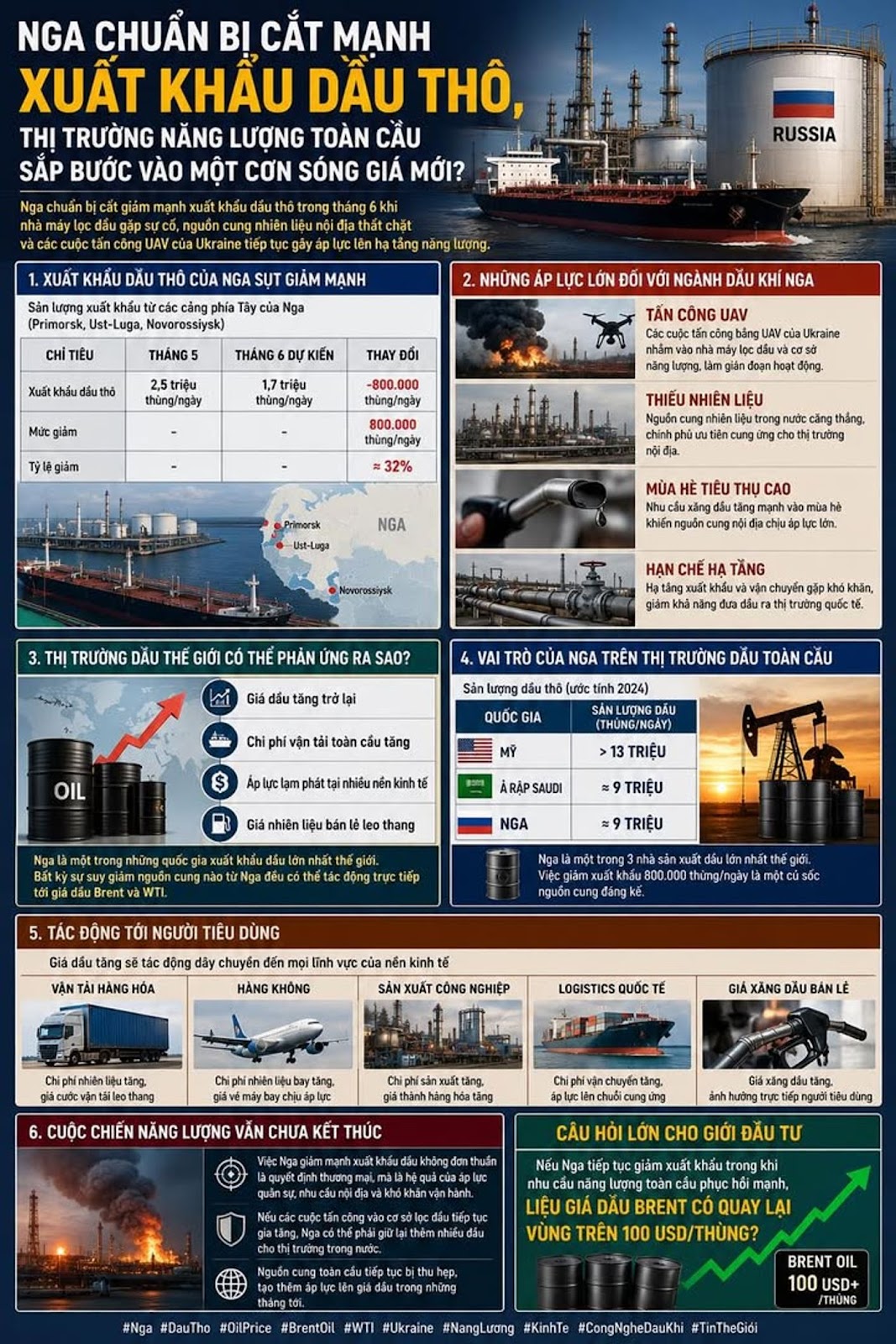
According to preliminary data from the oil and gas industry and international trading sources, Russia's crude oil exports from western ports—including Primorsk, Ust-Luga, and Novorossiysk—are projected to decline to approximately 1.7 million barrels per day in June. This represents a significant reduction from the roughly 2.5 million barrels per day exported in May, marking a decrease of nearly 32%.
Table: Russian Oil Export Comparison
| Indicator | May | June (Projected) |
|---|---|---|
| Crude Oil Exports | 2.5 million barrels/day | 1.7 million barrels/day |
| Reduction Volume | - | 800,000 barrels/day |
| Percentage Decrease | - | Approximately 32% |
## Factors Impacting Russia's Oil Sector
Three major factors are simultaneously affecting Russia's oil market, creating a perfect storm that necessitates reduced exports:
Key Factors Affecting Russia's Oil Market
- Continuous disruptions at refineries: Multiple Russian refineries have experienced operational failures and maintenance issues, reducing processing capacity.
- Strong increase in domestic fuel demand: As summer approaches, domestic consumption of gasoline and diesel has surged, creating pressure to maintain domestic fuel supplies.
- Ukrainian UAV attacks on energy facilities: Continued drone strikes on Russian energy infrastructure have further strained the country's refining capabilities.
When domestic fuel supplies show signs of tightening, Moscow is compelled to prioritize retaining more crude oil for domestic refining rather than exporting it.
Major Pressures Currently Facing Russia
| Factor | Impact |
|---|---|
| UAV Attacks | Reduced refining capacity |
| Fuel Shortages | Priority to domestic market |
| High Summer Consumption | Increased demand for gasoline and diesel |
| Infrastructure Limitations | Reduced export capabilities |
## Potential Global Market Reactions
Russia remains one of the world's largest oil-exporting nations, and any reduction in its supply can directly impact global oil prices, particularly Brent and WTI benchmarks. If the 800,000 barrels per day reduction is sustained over an extended period, the market could witness:
- Rising oil prices
- Increased global shipping costs
- Inflationary pressures in multiple economies
- Escalating retail fuel prices
## Russia's Position in the Global Oil Market
Major Global Oil Producers
| Country | Daily Production |
|---|---|
| United States | Over 13 million barrels/day |
| Saudi Arabia | Approximately 9 million barrels/day |
| Russia | Approximately 9 million barrels/day |
## Impact on Consumers and Various Sectors
Once oil prices increase, the effects will ripple across multiple sectors:
- Freight and shipping: Higher transportation costs for goods globally
- Air travel: Increased jet fuel prices affecting airline ticket prices
- Industrial manufacturing: Higher production costs for energy-intensive industries
- International logistics: Increased costs for global supply chains
- Retail fuel: Higher gasoline and diesel prices at the pump
Notably, the global energy market remains highly sensitive to geopolitical factors. Even a major incident in Russia, the Middle East, or along strategic shipping routes could cause significant oil price fluctuations in a short period.
## The Unresolved Energy Conflict
Russia's substantial reduction in oil exports is not merely a commercial decision but rather a consequence of military pressure, domestic demand requirements, and operational challenges within the energy sector. If drone attacks against refining facilities continue to intensify, Moscow may need to retain even more oil for the domestic market. This would further reduce global supply and continue to pressure oil prices in the coming months.
## The Critical Question for Investors
As investors grapple with the implications of Russia's export reductions amid a strong recovery in global energy demand, a pressing question emerges: If Russia continues to reduce exports while global energy demand rebounds robustly, will Brent crude return to the $100+ per barrel range?
The answer will depend on several factors, including the duration of Russia's export reductions, the effectiveness of OPEC+ production adjustments, and the geopolitical landscape in oil-producing regions worldwide. What remains certain is that the global energy market is entering a period of heightened uncertainty, with potential significant implications for economies and consumers worldwide.


