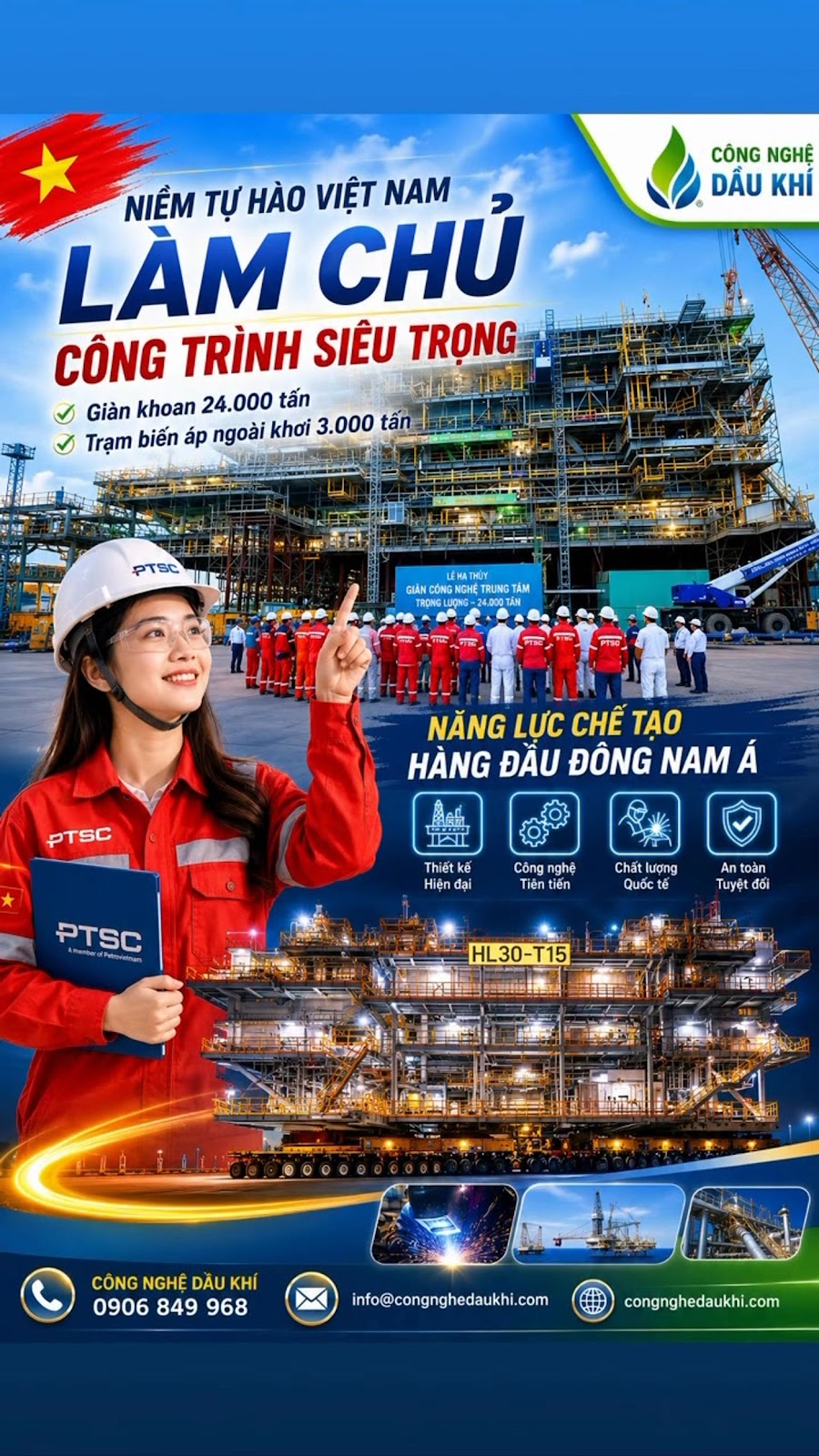
Vietnam Emerges as Southeast Asian Leader in Offshore Engineering Capabilities
In an era where offshore oil and gas infrastructure represents the pinnacle of industrial engineering, Vietnam has quietly positioned itself among the select few nations in Southeast Asia capable of designing, manufacturing, and assembling massive offshore structures weighing up to 24,000 tons for drilling rigs and 3,000 tons for offshore substations.
When discussing super-heavy offshore engineering projects, countries like Norway, South Korea, Singapore, China, and the United Arab Emirates typically come to mind. However, Vietnam's rapidly advancing industrial capabilities have enabled it to join this elite group, challenging perceptions about the nation's technical prowess.
Achieving Engineering Milestones
The visual documentation of Vietnam's manufacturing capabilities—showing massive topside platforms and offshore substations being constructed at domestic industrial ports—demonstrates not only technical competence but the maturation of the entire domestic mechanical manufacturing ecosystem.
These achievements are not merely about moving heavy steel; they represent the integration of complex systems including tens of thousands of meters of electrical cables, automated control systems, process pipelines, fire suppression systems, and adherence to stringent international safety standards.
Key Engineering Achievements
| Structure Type | Weight |
|---|---|
| Offshore central processing platform | Approximately 24,000 tons |
| Offshore substation | Approximately 3,000 tons |
| Large drilling rig base | Thousands to tens of thousands of tons |
| Oil and gas processing modules | Thousands of tons |
The Complexity of Offshore Engineering
Completing an offshore drilling rig or substation requires mastery of multiple technical disciplines simultaneously:
- Design of massive steel structural frameworks
- High-standard welding according to international specifications
- Precision machining of thousands of components
- Project management spanning tens of millions of man-hours
- Transportation and launching of super-heavy components
- Ensuring operational safety in harsh marine environments
The mere transportation of a topside structure weighing tens of thousands of tons from the fabrication yard to open sea constitutes a complex technical operation spanning multiple days, utilizing specialized hydraulic transport vehicles and heavy-duty barges.
Vietnam's Regional Standing
Within Southeast Asia, only a limited number of nations possess significant offshore fabrication capabilities:
| Country | Offshore Fabrication Capability |
|---|---|
| Singapore | Very strong |
| Indonesia | Strong |
| Malaysia | Strong |
| Vietnam | Strong and rapidly growing |
| Thailand | More limited |
| Philippines | More limited |
Notably, enterprises under Petrovietnam and PTSC have repeatedly participated in international projects and exported oil and gas components to various markets beyond Vietnam's borders.
Significant Economic Impact
A single large-scale offshore project can generate value ranging from thousands to tens of thousands of billion Vietnamese Dong. The benefits extend beyond direct revenue to include:
- Creation of thousands of jobs for engineers and highly skilled workers
- Development of domestic mechanical supply chains
- Reduced dependence on foreign contractors
- Increased localization rates in energy projects
- Elevation of Vietnam's industrial standing globally
Beyond Oil and Gas
These fabrication capabilities are now being applied to diverse sectors:
- Offshore wind power
- Offshore electrical substations
- Renewable energy infrastructure
- Marine construction projects
- Heavy industrial structures
This technical foundation positions Vietnam to participate more deeply in global energy supply chains during the ongoing worldwide energy transition.
The True Measure of Achievement
The most significant accomplishment is not measured in the impressive weight of 24,000-ton platforms or 3,000-ton substations. Rather, it lies in the demonstration by Vietnam's engineers, technicians, and enterprises that structures once considered "only achievable by industrial powers" can now be manufactured domestically and progressively exported to global markets.
As the energy landscape evolves, Vietnam's growing engineering capabilities represent a critical asset in the nation's economic development and technological advancement strategy.


